Partners
MSEP is a community-based project in the Eastern Townships of Quebec, Canada that thrives by building relationships, both in the migrant education community in Mae Sot, Thailand and in our own community here in Canada. We are grateful to all with whom we collaborate for their engagement with the broader project of advancing education for migrant and refugee youth. Among them are the migrant learning centers described below, organizations in Mae Sot such as the Burmese Migrant Workers Education Committee, the Inclusive Education Foundation, and Child’s Dream, and, in Canada, Champlain College – Lennoxville and Bishop’s University and the many individual donors and supporters who enable our activities.
Our Role in the Migrant Education Community
How does the assistance in the teaching of English provided by Mae Sot Education Project volunteers fit into the educational objectives of the migrant education community? English has become the global language. For the most precocious youth, it will open doors to higher educational opportunities that are otherwise simply unavailable to them. For others, it may be of lesser value but will lead to job opportunities, if only in Mae Sot or upon return to Myanmar. It is a service we can offer which is highly valued by the Burmese educational community in creating its own future. However, for our project, English teaching is not the primary objective. We see the teaching of English as a vehicle for opening a window on the world for Burmese children and also for creating bonds between volunteers and children that prove enriching on both sides. In addition, volunteers provide other kinds of pedagogical support in other subject areas as well as engaging in extra- curricular enrichment activities many of which are made possible through shared language. It is the human – both intellectual and emotional – connections forged through this whole constellation of activities that give our project its value to our partners.
A Note on Migrant Education
There are currently 62 migrant schools or “learning centres” with about 700 teachers in Tak province where Mae Sot is located. They serve about 18,000 children (note: more than half of the school-aged migrant children in Tak are out of school). Some offer primary grades only while others offer either secondary only or the entire ten grades, depending on their capacity. A few “LCs” offer “post-10” vocational or GED (General Education Diploma) programs for older youth. The schools vary considerably in size and in available resources, depending on funding from foreign donors, networking within the educational community, etc.
In recent years, Burmese educators have tried to standardize curriculum so that children moving from one school to another have similar experiences. This standardization relies heavily on the use of the Myanmar curriculum. At the same time, they have adapted their curriculum to meet the Thai Ministry of Education requirement that they offer Thai language. Thus migrant children often study three and sometimes four (Burmese, Karen, Thai and English) languages. Finally, conscious of the inadequacy of traditional Burmese education to meet the needs of people living in a 21st-century democratic society, some schools have tried to integrate critical thinking pedagogy into their teaching, leading to development of curricula for new subject areas such as environment studies, social studies, and Burmese culture, history and politics in addition to traditional disciplines such as language, math, art, and natural sciences.
Teaching in all subject areas depends on the availability of trained teachers and materials, both of which are always in short supply. Schools rely heavily on volunteer teachers to fill gaps in the curriculum. Until its departure from Mae Sot in 2017, World Education was instrumental in developing curriculum and in providing teacher training. With its departure, learning centres have felt the loss of an important source of pedagogical support. Between 2012 and the 2021 coup, when eventual return to Myanmar for at least some students seemed possible, there was some collaboration with the Myanmar Ministry of Education; the migrant education community worked to strengthen older students’ ability to succeed in the Myanmar system and offered Myanmar matriculation exams. However, the coup put these initiatives on hold. At the same time, for those who see their future in Thailand, efforts are being made to provide children with the language and general knowledge needed to gain access to the Thai educational system. Funding is needed to facilitate both these efforts.
The Impact of COVID-19 and the Coup
During the Covid-19 pandemic, The Thai government closed the border between Myanmar and Thailand in 2020. It also required migrant learning centers to close to students temporarily. Migrant educators did not want the children in their community to spend a year out of school. Thus they worked overtime to create a program of home-based Learning (HBL) activities and to prepare teachers to travel to villages and other settings where migrants live to deliver lessons. A number of NGOs (including MSEP) as well as UNICEF provided financial support. When the coup happened, access to education in Myanmar became more difficult and the Myanmar government instituted a new conscription policy affecting youth. As a result, there has been a huge influx of Myanmar youth to Mae Sot. Thus the combination of the pandemic and the 2021 coup in Myanmar have increased the instability, family separation and insecurity with which people in the migrant community have to live.
Migrant Learning Centre Partners
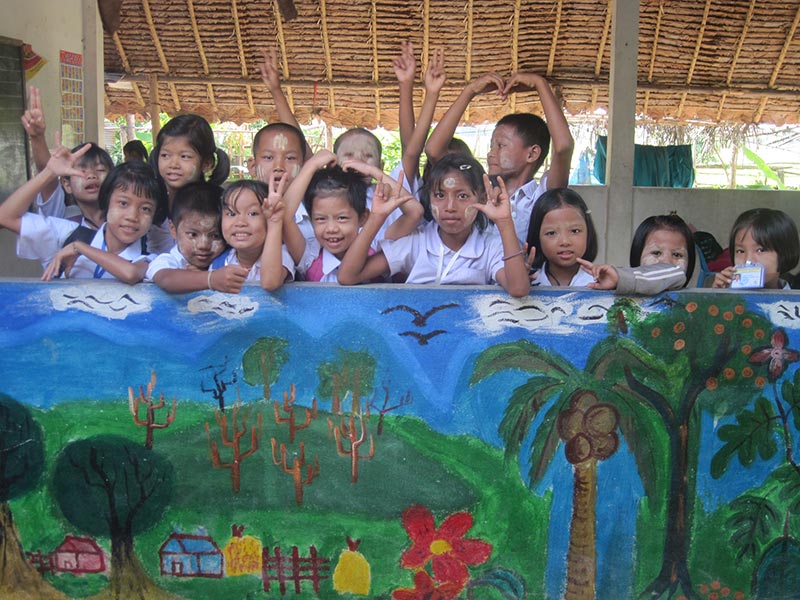
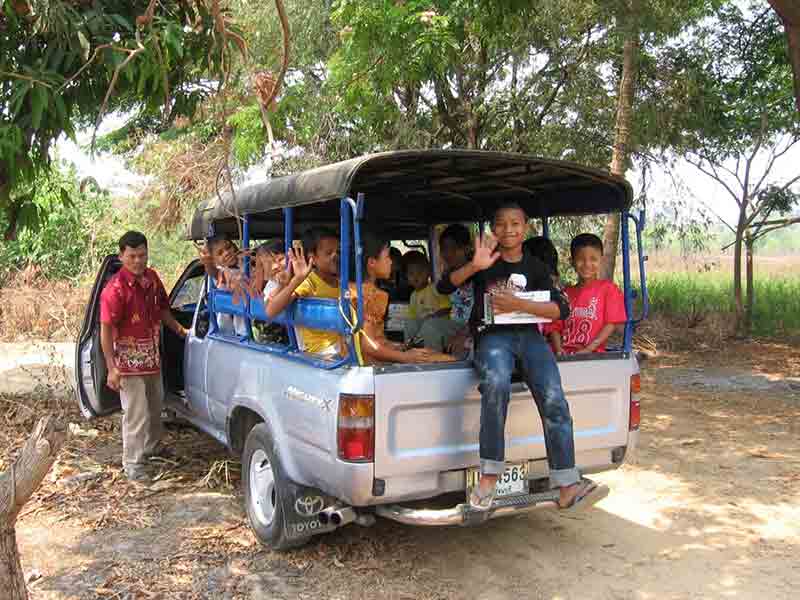
All of our partner schools in Mae Sot serve the needs of children of migrant workers and people driven across the border by repression, conflict and economic hardship in Myanmar. All open their doors to children of all religions and ethnicities. Funding for the schools has come from a variety of sources. During the last several years, many donors have turned their attention elsewhere, and in the face of the pandemic and the coup, new problems have arisen particularly as the number of students seeking assistance has grown. Migrant learning centers face constant difficulties finding sufficient funds to carry on with their work.
The Boarding High School for Orphans and Helpless Youth (BHSOH)
The Boarding High School for Orphans and Helpless Youth (BHSOH) has a new campus, located in the countryside outside Mae Pa, near Mae Sot. It was founded in 1993 by U Khaing Oo Maung, an educator and democracy activist of the 1962 generation. Last year, the new campus or “Education Village” grew to include Minmahaw, a post ten and GED preparatory school program in Mae Sot and the Education for Friendship Foundation (https://educationforfriendship.org/). Along with providing primary and secondary education, BHSOH boards and cares for orphans and neglected children. One of its challenges is to find educational options for students who have finished its G1-to-G10 program. To meet their needs, it prepares a small group of students for GED programs, offers a Kor Sor Nor (Thai Nonformal Education) program to help students who wish to transition into the Thai education system and is also the home of the Youth Connect Life Skills program. BHSOH serves more than 600 students, 25 of whom live at the school. It has 19 teachers and staff. The school’s work is overseen by a School Management Committee, and its core funding comes from Child’s Dream and a Canadian donor (through MSEP).


Hsa Thoo Ley Learning Centre and Orphanage
Hsa Thoo Lei Learning Center and Orphanage is situated on the outskirts of Mae Sot. It was founded in 1999 by Karen leader Naw Paw Ray as a school for children of migrant workers under the umbrella of BMWEC (Burmese Migrant Workers Education Committee). The largest of the migrant learning centres in Mae Sot, it is divided into three “schools” (pre-school, primary and secondary) and has more than 900 students (about 300 in the secondary program), including more than 100 boarding students, and a staff of 62. It has a large campus with a number of buildings built with funding from international NGOs including a boarding house, nursery and housing for some of the faculty in addition to classrooms, office space, a library and an auditorium. Until the coup, Hsa Thoo Lei worked closely with the Myanmar Department of Education as well as the Thai government and developed a program to prepare older students to take matriculation examinations in Myanmar. Since the coup, that program has been suspended and the school is focusing on GED preparation. Teacher recruitment and funding for operating costs and salaries are huge challenges for such a large school. It relies on international donors such as the Cotton On Foundation and increasingly on parents for basic funds. MSEP contributes a small amount.


Parami Learning Centre
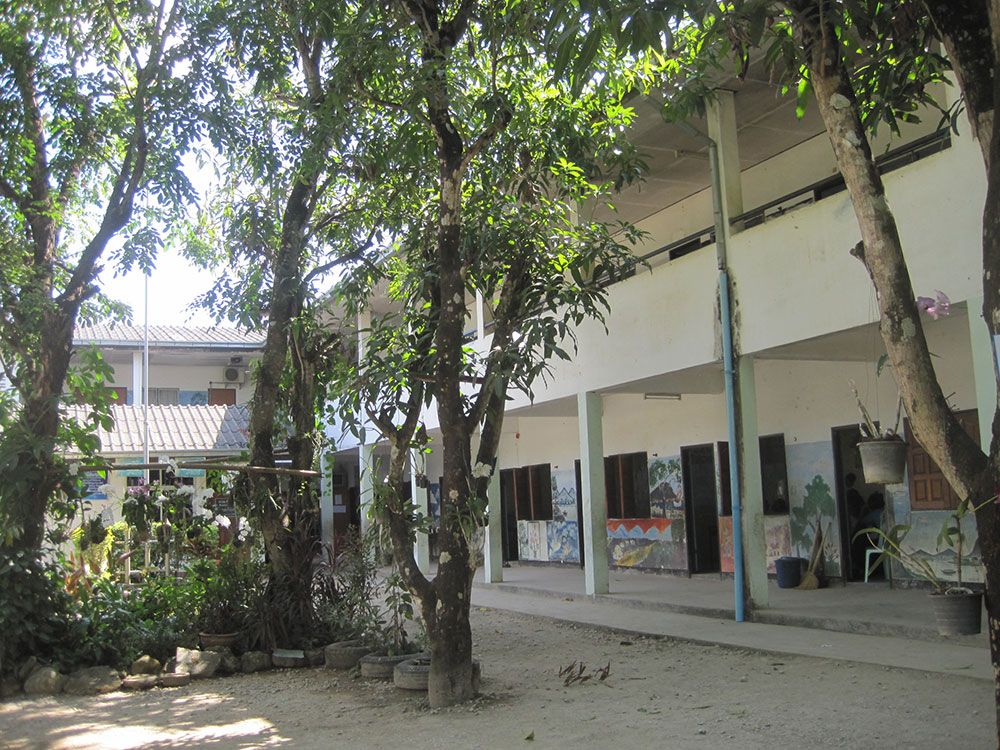
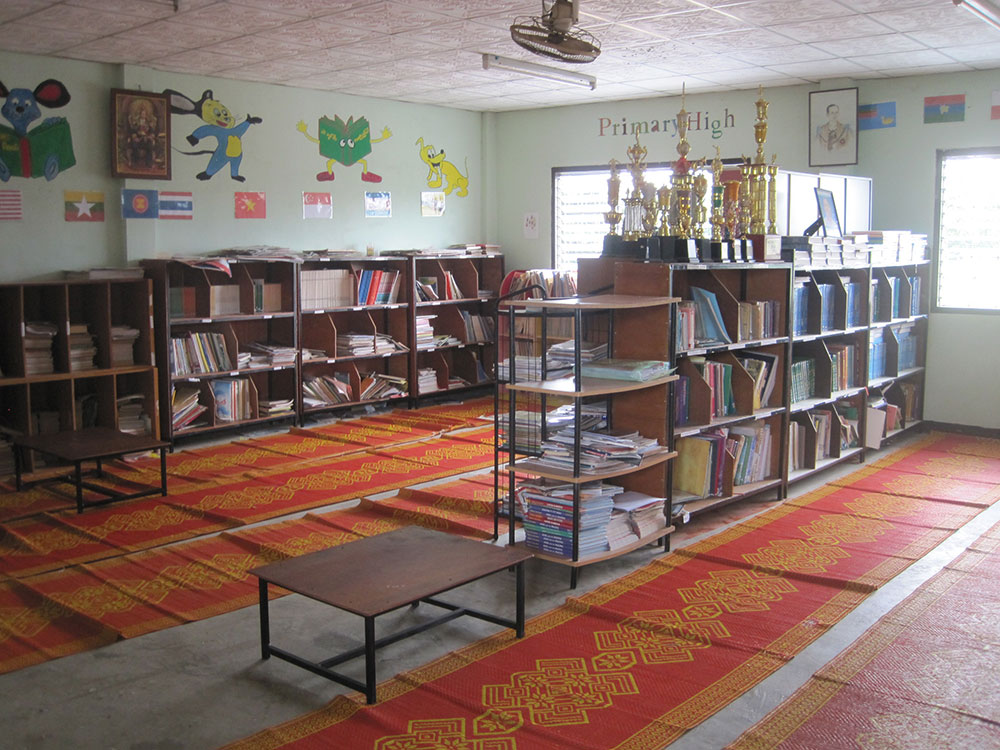
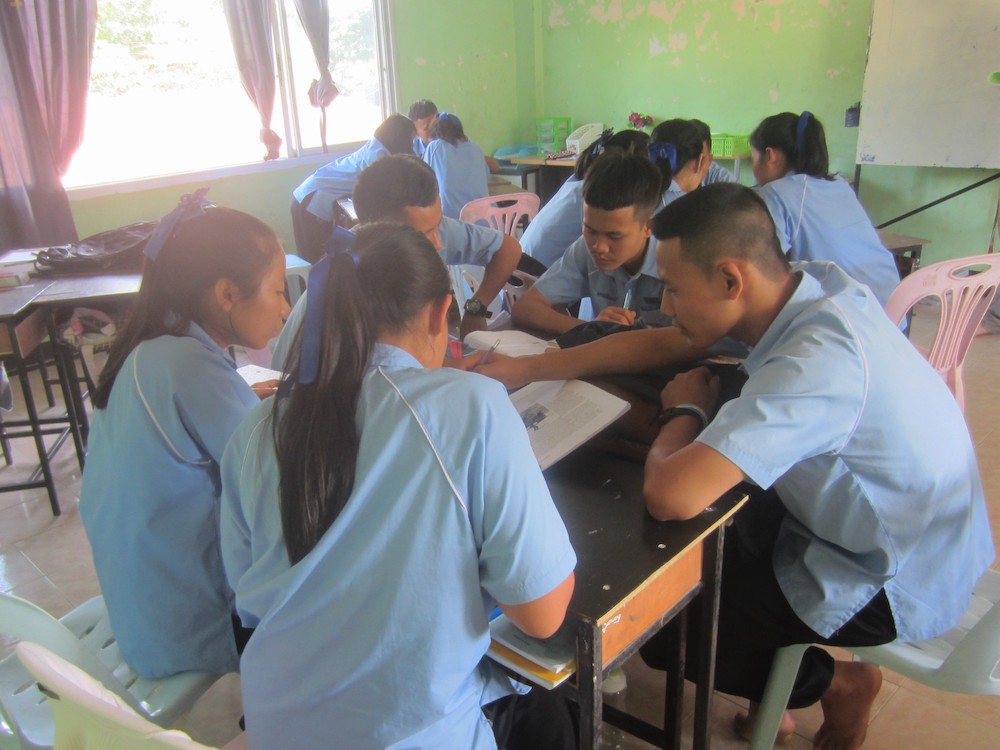
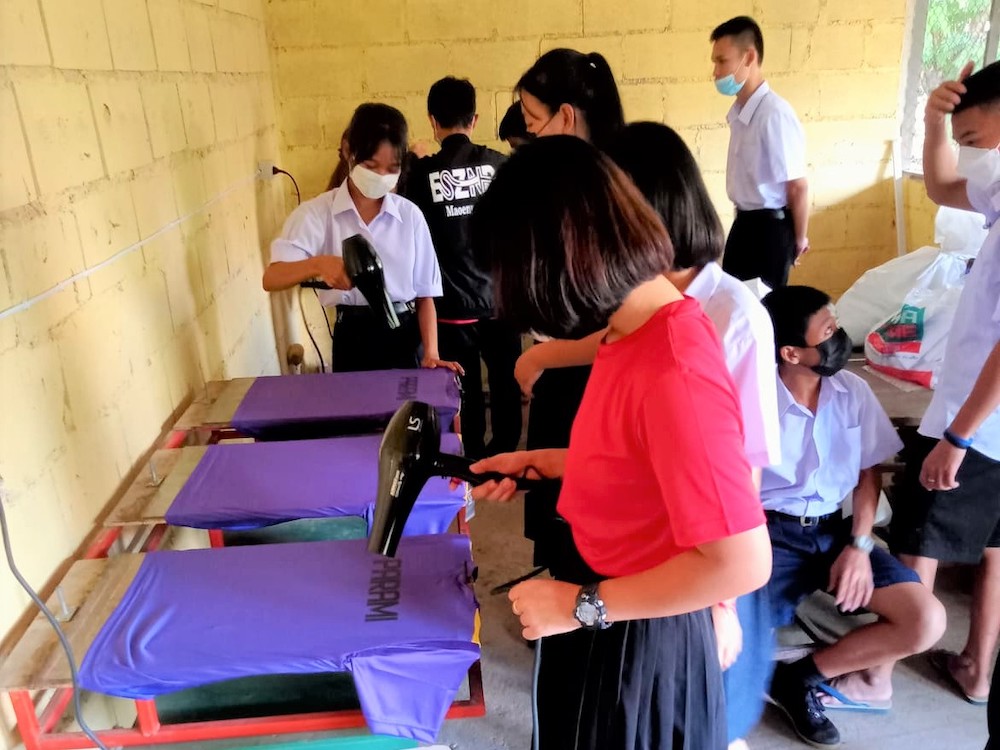
Parami Learning Centre began in a small house but moved in 2010 to a large piece of land, realizing the dream of the school organizers to make the school more self-sustaining through development of gardening and fish pond projects and to build a vocational education program for students who have outgrown its K to G10 program. Before the coup, the school had a Myanmar-based Nonformal Education (NFE) program. Post-Covid and the coup, the school leadership team changed, and it experienced transitional difficulties. Today it houses a Kor Sor Nor (Thai Nonformal Education or NFE) program, a developing vocational program and accommodates about 600 students, including 54 boarding students, and has 27 teachers. Over time, Parami’s biggest challenge has been a steady increase in its land rent. Funding for rent, transportation and salaries for teachers comes largely from parent contributions. In addition, students and teachers are producing bags, embroidery, dried meat and sausage to add to the school fund. MSEP and a number of other organizations also help.


Pyo Khinn Learning Centre
Pyo Khinn Learning Center was started in 1999 by Muslim headmaster U Thein Tun. It moved to a new location in 2022 and under the leadership of its dynamic administrative team has renovated and expanded the teaching spaces to create a warm and comfortable learning environment. The school has 8 teachers and about 175 students in nursery to grade 7. Pyo Khinn is lodged in a corner of Mae Sot that serves a poor and largely Muslim community. Given the situation for Muslims in Myanmar, added to the militarization, there is little prospect of these children returning there. The school’s main concern is to keep children coming to school at present. The drop-out rate is fairly high because of the poverty these families face. Some families contribute to school funds; most cannot. Pyo Khinn uses a Burmese curriculum but recently introduced a Kor Sor Nor (Thai Nonformal Education) program. Its core funding comes from Child’s Dream. MSEP also donates to help cover smaller expenses (like school lunch!).


Hsa Mu Htaw Learning Centre
One of our first friends in Mae Sot was the educator, Daw Htet Htet Aung. A number of years ago, she took responsibility for helping a very poor primary school that was in need of her organizational skills. Under her leadership, the school blossomed. It served more than 200 children ranging in age from 3 to 13 years and had 9 teachers. Along with a primary Myanmar school program (nursery through grade 6), based largely on the curriculum, it had a Montessori preschool program and a dormitory for boarding students. A mushroom growing project, initiated by another Canadian NGO, provided a small income that Daw Htet Htet Aung allowed the children to administer. In addition, the children undertook handicraft projects to try to raise funds for their school. Funding was always precarious. COVID and the Coup and subsequent loss of funding forced the school to closed briefly. However, it was revived by a new team in 2023 and is currently staffed by 8 teachers and is serving close to 200 students, including about a dozen boarding students. MSEP provides a significant amount of the funding needed to keep the school open.
Link to Pdf version:
The Mae Sot Education Project’s School Partners (PDF)


Youth Connect – A new developing partnership
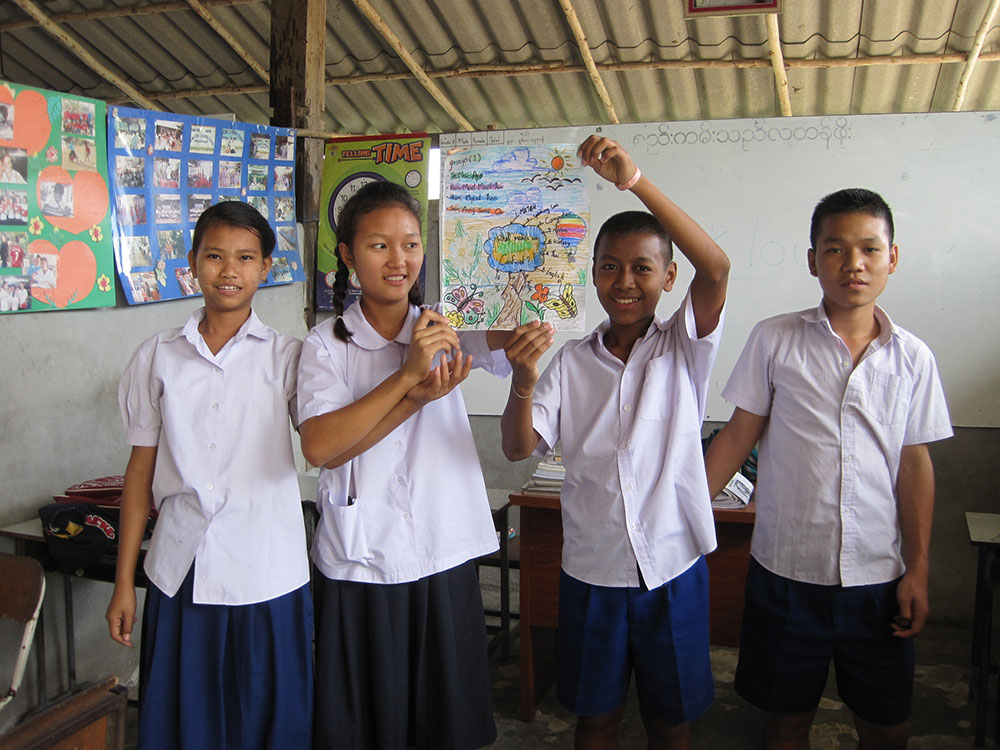
The Youth Connect Foundation began in 2007. Today it provides training, apprenticeships and career services so Myanmar students can transition to safe, productive and independent lives. It is responding to the needs of Myanmar youth who see few options upon finishing secondary programs at migrant learning centres. It offers life skills training as well as training in Hospitality and other vocations and works in partnership with local businesses in Mae Sot. Offering the prospect of advancement beyond secondary school, it provides an Volunteers meeting the Youth Connect Team incentive for students to stay in school. It is fully supported by Child’s Dream. In 2024 for the first time, MSEP offered its volunteers to assist Youth Connect in its English language programs. We are continuing this engagement with volunteers assisting in the YC Hospitality training and look forward to future collaboration.

Youth connect class – 2 years ago

Youth Connect

Youth Connect students
(photo credit: Tom Matthews)